Social distancing was a crucial policy in halting the spread of COVID-19 in the absence of an effective treatment or vaccine. While knowledge on the effects of social distancing in containing the pandemic is developed, its impacts on the economy are not yet clearly understood. Alexandre Gori Maia (UNICAMP), Letícia Marteleto (UT-Austin), Cristina Rodrigues (FIPE/USP), and Luiz  Gustavo Sereno (UNICAMP) analyzed the trade-offs between health and the economy during the period of social distancing in São Paulo (SP), the state hardest hit by the COVID-19 pandemic in Brazil. The authors found robust evidence for the benefits of social distancing on health indicators, while there was no evidence that municipalities with tougher social distancing performed worse economically.
Deepening democratization in Brazil has coincided with sustained flows of domestic migration, which raises an important question of whether migration deepens or depresses democratic development in migrant-sending regions. Alexandre Gori Maia (UNICAMP) and Yao Lu (Columbia University) analyzed the impacts of internal migration on Brazil's municipal elections. The authors show that migration increases electoral participation and competition in migrant-sending localities. The paper (click here for full access) has been published in the journal Demography.

Although reducing poverty in the income or consumption perspective remains a top priority in the developing world, other dimensions are also critical to a decent life, such as health, education, and living conditions. However, one main challenge is to define an indicator that better reflects the multiple dimensions of capabilities or human needs in modern societies. Adriana Stankiewicz Serra (UNICAMP), Gaston Yalonetzky (Leeds University), and Alexandre Gori Maia (UNICAMP) have proposed new multidimensional poverty measures for Brazil, based on essential and policy-relevant well-being indicators that go beyond income needs. The authors highlight how the poor population may more than double if we consider non-monetary dimensions of poverty.

The transport sector in Brazil takes second place in greenhouse gas emissions. The problem is that, despite recent efforts to promote policies of sustainable urban accessibility, the use of private modes of transport in Brazilian megacities is still high when compared to other developing nations. Alexandre Gori Maia, Cristiane Carvalho (CEQUA, Chile), Leonardo Venancio (UNICAMP), and Eduardo Dini (UNICAMP) analyzed the main motives behind adopting the modes of transport among students at the UNICAMP. The paper has been recently published at Revista Ambiente & Sociedade (access here).

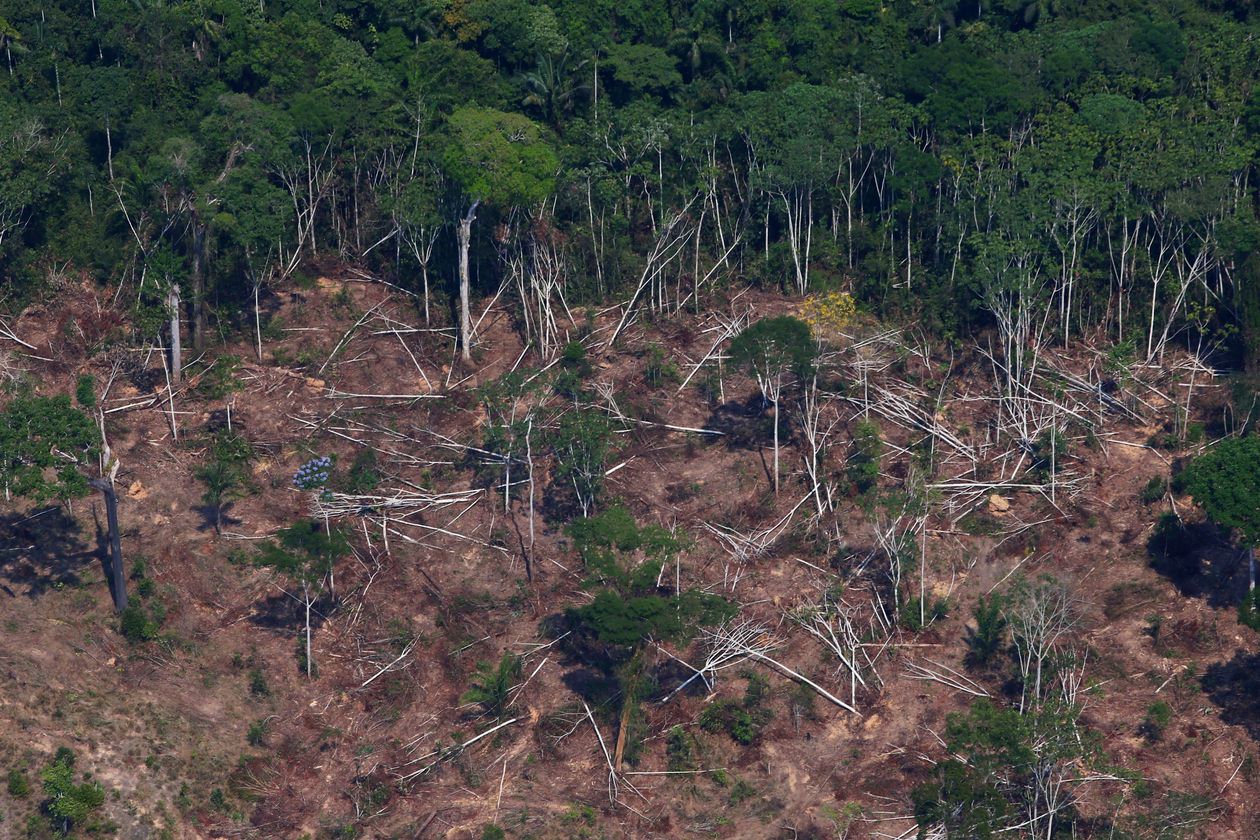
Alexandre Gori Maia (UNICAMP) and Stella Zucchetti Schons (Virginia Tech) analyzed the impacts of the main extreme and gradual environmental changes on migration flows in the Brazilian Amazon. Gradual changes include historical changes in deforestation, temperature, and precipitation. Extreme changes include unexpected temperature and precipitation events. The authors show how environmental change has accelerated to the current and growing process of urbanization in the Brazilian Amazon. The paper has been recently published in the journal Population and Environment.